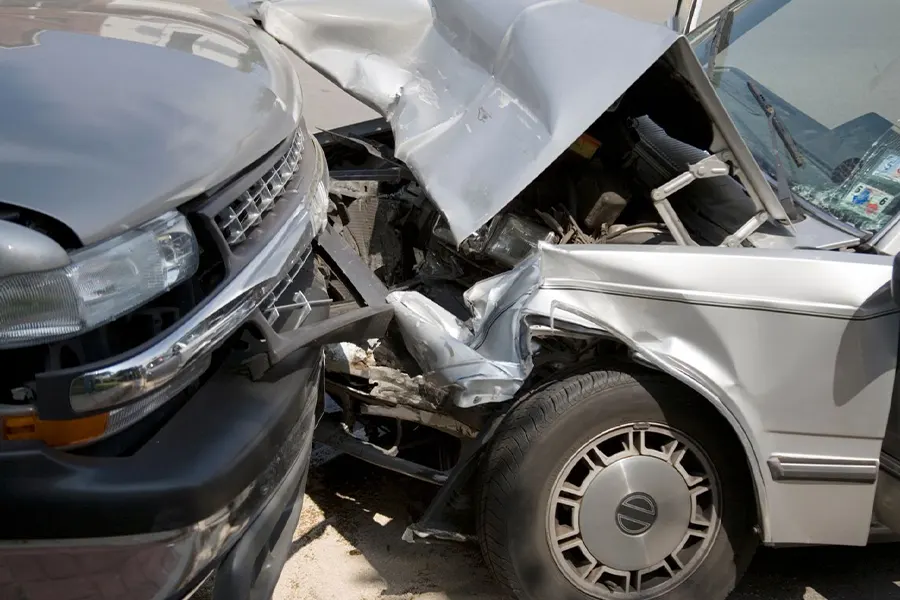
California law requires drivers to stay on the right side of dividing lines and barriers. When someone crosses into oncoming traffic and causes a head-on crash, they’re typically liable for damages, including medical bills, lost wages, and pain and suffering. These crashes produce severe injuries because the combined force of both vehicles creates massive impact energy.
Head-on collisions in California are governed by pure comparative negligence laws, meaning you can recover damages even if you’re partially at fault. Your compensation gets reduced by your percentage of fault.
As a respected personal injury law firm serving clients in Temecula and throughout California, Zucker Personal Injury & Accident Lawyers has helped many individuals navigate these complex cases. We understand how California courts apply negligence laws in real-world head-on collision claims.
Common Injuries in Head-On Crashes
The physics of head-on collisions creates devastating forces. When two vehicles traveling at 50 mph collide head-on, the impact force equals that of hitting a stationary object at 100 mph. This massive energy transfer causes severe trauma to vehicle occupants.
Typical injuries include:
- Traumatic brain injuries. The sudden deceleration causes the brain to strike the inside of the skull. These injuries range from concussions to permanent cognitive damage.
- Spinal cord damage. Impact forces can fracture vertebrae or damage the spinal cord itself. Victims may face partial or complete paralysis.
- Chest and internal injuries. The steering wheel, dashboard, or seatbelt can crush the chest cavity. Broken ribs often puncture lungs or other organs.
- Facial trauma. Airbag deployment or contact with the windshield causes facial fractures, lacerations, and dental injuries.
- Broken bones. The legs, arms, pelvis, and hips commonly break from the impact or crushing forces inside the vehicle.
- Psychological trauma. Survivors often develop post-traumatic stress disorder, anxiety, or depression following these terrifying crashes.
Many of these injuries require extensive medical treatment. Victims face emergency room visits, surgeries, rehabilitation, and ongoing care. The financial costs quickly exceed hundreds of thousands of dollars in severe cases.
How Head-On Collisions Happen
Head-on crashes occur when the front ends of two vehicles traveling in opposite directions collide. They’re among the most dangerous types of accidents on California roads. While head-on collisions represent only about 4 percent of all crashes, they account for nearly 30 percent of traffic fatalities, according to the National Safety Council’s 2023 data.
These accidents most often happen on two-lane roads without physical barriers. Common causes include:
- Wrong-way driving. A driver enters a highway off-ramp instead of an on-ramp, or drives in the wrong direction on a one-way street.
- Crossing the center line. Distraction, drowsiness, or impairment causes a driver to drift into oncoming traffic lanes.
- Unsafe passing. A driver attempts to pass another vehicle on a two-lane road without adequate visibility or distance.
- Weather conditions. Rain, fog, or ice reduces visibility and vehicle control, leading to lane departures.
- Mechanical failures. Brake failures or steering malfunctions can cause drivers to lose control and cross into opposing lanes.
California Vehicle Code Section 21651 makes it illegal to drive on the wrong side of intermittent barriers or dividing sections that separate opposing traffic lanes. When someone violates this law and causes injury or death, they can face criminal charges in addition to civil liability. The violation itself establishes “negligence per se,” which means the law violation automatically proves the driver failed to exercise reasonable care and is liable for resulting injuries.
California’s Pure Comparative Negligence System
California follows what’s called “pure comparative negligence.” This legal framework allows you to pursue compensation even if you share some fault for the accident. Courts divide responsibility among all parties and reduce your compensation by your percentage of blame.
Here’s how it works in practice. Say you’re injured in a head-on collision with total damages of $100,000. The other driver crossed the center line while texting. But you were driving slightly over the speed limit. A jury determines you’re 15 percent at fault and the other driver is 85 percent at fault. You may recover $85,000, which is the full amount of your damages minus your 15 percent share of fault.
This system differs from many other states. Some states bar you from recovering anything if you’re more than 50 percent at fault. California lets you pursue compensation even if you’re 99 percent responsible, though your recovery would only be 1 percent of the total damages.
The pure comparative negligence rule comes from California Civil Code Section 1714, which states that everyone is responsible for injuries caused by their lack of ordinary care. California courts interpret this broadly to allow maximum recovery for injured parties while still accounting for their own role in causing harm.
Determining Liability in Head-On Collisions
Establishing who’s responsible requires examining all evidence from the crash scene. Law enforcement officers typically investigate and file reports documenting their findings. These reports often include:
- Physical evidence. Skid marks, vehicle damage patterns, and debris fields show where the collision occurred and which vehicle crossed the center line.
- Witness statements. Passengers, pedestrians, or other drivers may have seen what happened before impact.
- Vehicle data. Modern cars contain event data recorders that capture speed, braking, and steering inputs before a crash.
- Driver statements. What each driver says at the scene and in subsequent interviews helps reconstruct the sequence of events.
- Traffic camera footage. Intersection cameras or dashboard cameras may have recorded the collision.
California’s negligence per se doctrine simplifies liability in many cases. If a driver violated a traffic law designed to prevent the type of harm that occurred, that violation establishes negligence as a matter of law. For instance, if a driver crossed a double yellow line and caused a head-on collision, violating Vehicle Code Section 21651 proves negligence without requiring additional evidence about their state of mind.
However, the defense can still argue comparative fault. They might claim you were speeding, distracted, or failed to take evasive action that could have avoided or lessened the impact. This is where having experienced legal representation matters. Attorneys Andrew Zucker and Valerie Zucker, with our team at Zucker Personal Injury & Accident Lawyers, know how to counter these arguments and minimize your assigned fault percentage.
Insurance Claims and Coverage Limits
California law requires all drivers to carry minimum liability insurance. As of January 2025, those minimums increased to:
- $30,000 per person for bodily injury or death
- $60,000 per accident for bodily injury or death (total for all injured people)
- $15,000 per accident for property damage.
These amounts represent the floor, not the ceiling. Many drivers carry higher limits and some have umbrella policies providing additional coverage. However, even the new minimums often fall short in serious head-on collisions where injuries are catastrophic.
When you file a claim after a head-on collision, you’re dealing with the at-fault driver’s insurance company. Their adjuster will investigate the claim and make a settlement offer. Insurance companies frequently try to minimize payouts by:
- Disputing liability. They’ll argue their driver wasn’t completely at fault, or that you share more blame than the evidence shows.
- Questioning injury severity. They may claim your injuries aren’t as serious as you report, or that they resulted from a pre-existing condition rather than the crash.
- Pressuring for quick settlements. They often make low offers early, before you know the full extent of your injuries or their long-term impact.
California’s pure comparative negligence system gives insurance companies leverage in settlement negotiations. They know that even a small percentage of fault assigned to you reduces their payout obligation. That’s why many head-on collision victims benefit from legal representation. An attorney can gather evidence, negotiate with adjusters, and ensure you receive fair compensation based on the true facts of your case.
California Head-On Collision Data
According to the Statewide Integrated Traffic Records System, in 2024, California had 167,885 fatal and injury crashes. Head-on collisions account for a high number of deaths. A 10-year review by the California Department of Transportation revealed that 26 percent of traffic deaths in the state involved head-on crashes or vehicles leaving their lanes.
Rural areas see higher fatality rates from head-on collisions than urban zones. This occurs for several reasons. Rural roads often lack physical barriers separating opposing traffic lanes. Higher speed limits increase impact forces. Greater distances to trauma centers mean longer response times for emergency medical care.
State and national data have driven improvements in vehicle safety design, including crumple zones, advanced airbag systems, and stronger passenger compartments. Despite these advances, head-on collisions remain among the deadliest types of crashes.
Frequently Asked Questions
What should I do immediately after a head-on collision?
Call 911 right away and get medical attention for all injuries, even if they seem minor. Don’t leave the scene until police arrive and clear you. Exchange insurance information with the other driver, and get contact information from any witnesses. However, remember to avoid discussing fault. Take photos of vehicle damage, skid marks, and road conditions if you’re physically able. Then contact a personal injury attorney before speaking with any insurance company.
How long do I have to file a claim in California?
Generally, California law gives you two years from the accident date to file a personal injury lawsuit, such as for your head-on crash. This deadline comes from California Code of Civil Procedure Section 335.1. Property damage claims have a three-year limit. If you’re filing against a government entity, you must submit an administrative claim within six months. Missing these deadlines usually means losing your right to compensation, so don’t delay seeking legal help.
Can I recover damages if I wasn’t wearing a seatbelt?
Yes. California uses pure comparative negligence, which means failure to wear a seatbelt doesn’t completely bar recovery. However, the defense may argue that your injuries would have been less severe if you’d worn your seatbelt. This could increase your assigned percentage of fault and reduce your compensation accordingly. The key question becomes whether the seatbelt would have prevented or lessened specific injuries.
What if the other driver doesn’t have insurance?
You have several options. If you carry uninsured motorist coverage, your own insurance policy covers your injuries up to your policy limits. You can also file a lawsuit against the uninsured driver personally, though collecting a judgment may prove difficult if they lack assets.
California law requires drivers to carry insurance, but more than 20 percent of California motorists drive uninsured, according to the Insurance Information Institute. This makes uninsured motorist coverage particularly valuable protection.
Key Points to Remember
- Head-on collisions produce severe injuries because of the combined force of both vehicles at impact.
- California’s pure comparative negligence system lets you recover damages even if you share some fault for the crash. Your compensation gets reduced by your percentage of responsibility.
- The state requires minimum insurance coverage of $30,000 per person and $60,000 per accident for bodily injury as of 2025.
- Wrong-way driving and crossing center lines violate California traffic laws and establish negligence per se.
- You have two years from the accident date to file a personal injury lawsuit in most cases.
- Pieces of evidence from the crash scene, including skid marks, vehicle damage, and witness statements, help establish who’s liable.
- Insurance companies often try to minimize payouts by disputing liability or questioning injury severity. Having experienced legal representation helps counter these tactics and maximize your recovery.
Contact Zucker Personal Injury & Accident Lawyers for Help With Your Personal Injury Case
If you’ve been injured in a head-on collision, contact Zucker Personal Injury & Accident Lawyers to discuss your case. We understand how California courts apply comparative negligence laws and can help you recover maximum compensation for your injuries.
Andrew Zucker and Valerie Zucker are top-rated personal injury attorneys in Temecula, California. Visit Andrew Zucker’s or Valerie Zucker’s profile to learn more about their experience and results. Call (951) 699-2100 to schedule a free consultation.